
A Year After Leaving Government
Having an LLC instead of an employer
When I registered my LLC last year, it was right after I’d taken the Deferred Resignation Program — the program whereby the government paid me to leave DHS AI Corps. I needed a name, so I described to Claude what I do, gave it the acronym DRP, and picked my favorite suggestion: Data Research Partners, LLC.
I wasn’t thinking about how this name I picked as a bit was going to be on my business cards, my LinkedIn, my tax forms, and my bios when I give talks. That’s because I didn’t think I would still be doing this full-time a year from now. I assumed I would do some part-time consulting and then go back to a full-time salaried role. But I haven’t, and I’ve had a much better year for it.
This is about why I chose that and what it’s cost me.
What I wasn’t going to give up
AI Corps — before it collapsed — had a lot of things that I loved. I got to work on multiple projects at once, sometimes by raising my hand to volunteer, or by putting some work in to build and then saying “hey, I think we should do more of this.” I had technical autonomy in the areas where it matters to me. I was getting to grow my career in the ways I wanted, and work on things that mattered to me. I had a level of compensation I was happy with, and I was able to work from home.
When I left, I didn’t want to give up any of those things. But the salaried jobs that had all of those attributes weren’t going to hire me. I’d gotten engineering interviews through recruiters and my network, but the interviewers could tell immediately I wasn’t what they were looking for. I don’t have a STEM or CS background, and I haven’t worked as a software engineer.
Meanwhile, unpaid side projects I was doing were leading to meeting people who wanted to work with me, and former coworkers were reaching out as well. When someone’s hiring for a role, there are a lot of boxes they want to check, and I don’t typically fulfill those. But when they see what I do — when they can go, “Oh, there’s this person who does these interesting things” — they’re not checking off boxes anymore, and that’s a much better lane for me.
It’s also lower-risk for them: they don’t have to commit to 40 hours a week. And the comp piece can work out better as well. There are organizations that wouldn’t pay any engineer the full-time equivalent of what I make, but will make room for a contractor on a fixed number of hours for a specific project.
What I do for a living
My niche is full-stack data engineering with Claude Code. I build the data pipeline. I do the analysis, frequently with LLMs for the text analysis part, and now increasingly with agents. I also build the front end in JavaScript. I’m not the best person you could hire for any one of these parts, but I’m good enough at all of them for various kinds of data projects. You can also put me in front of a client to take requirements, and I can brief or write up what I made.
What am I actually very good at? Architecting pipelines with LLMs. I’ve been doing it for about as long as anyone has. But I don’t want to only do that, and I don’t want to do it full-time on one specific pipeline.
My specialty is public, government data. If it’s in an API, on a website, or scattered across Excel files or PDFs, I’ll get it. And like with nearly all of the technical work, I’m an intermediate generalist: I’m not the best person to analyze any of the data sets I work with. The best people tend to be at the relevant federal agency, or building their own startups and consulting practices around the data, or they’re data SMEs who aren’t engineers.
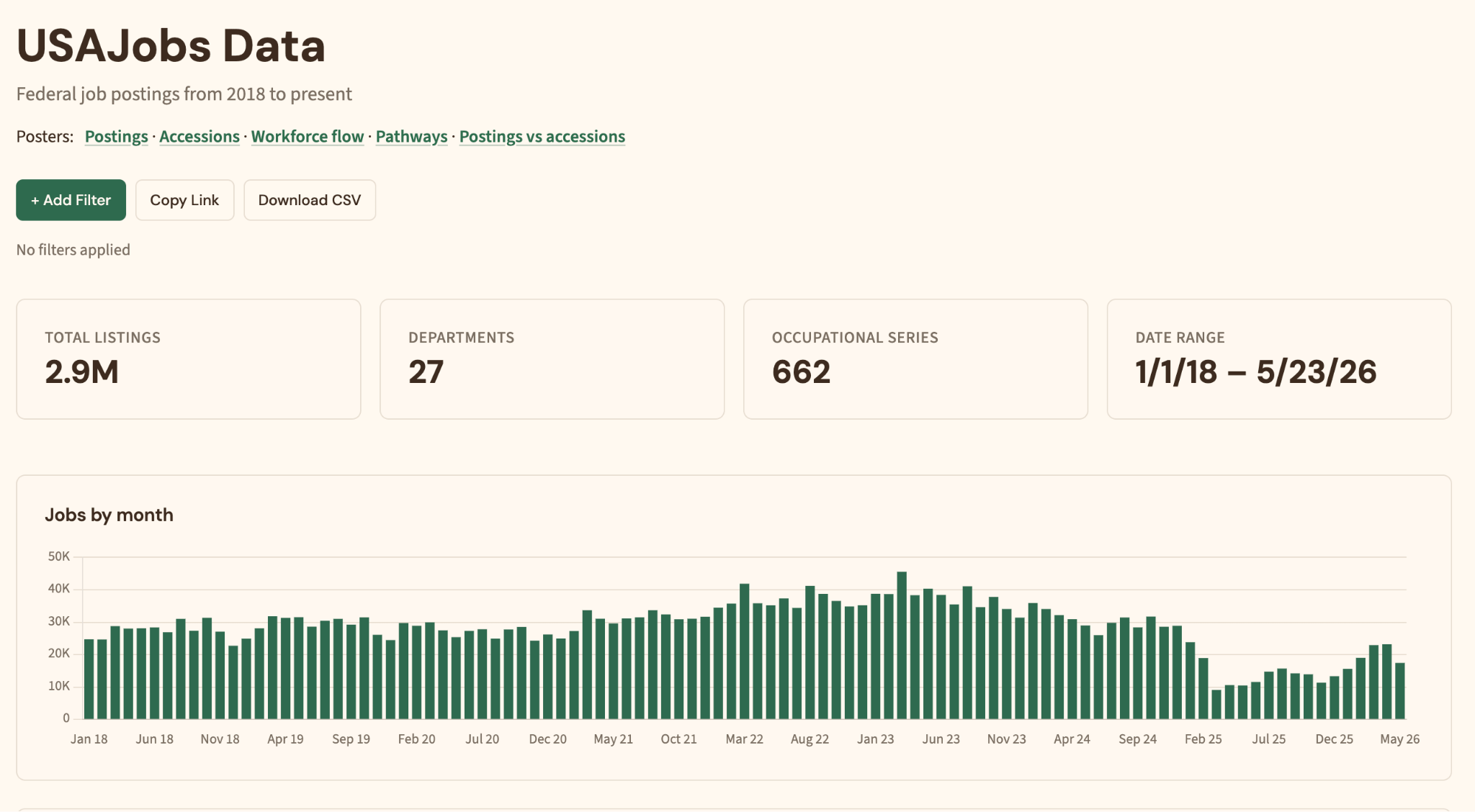
Having a brand like this is useful. It indicates where to focus my unpaid career-development time, like for side projects or talks. It tells me what to say yes to and how to describe myself. And it tells potential clients what not to hire me for: I’m not the right person for building software, because you can get someone cheaper and better at it, and I tell people that.
Marketing: none, or a lot
I got lucky early on with a client. We connected when I was on DRP. I offered to do something for free; they insisted on paying me for it, which was a good sign. They guarantee me up to 40 hours a week and they’re great to work with in a bunch of ways. I have one other substantial client, who I’ve been half-time with at various points, and then a handful of others I’ve done smaller projects for. I typically bill about 40 hours a week total, but the mix varies.
In a sense, I haven’t done any marketing to find clients. I haven’t posted on LinkedIn that I’m available. I mentioned a couple of times in talks that you can hire me, but no one ever did hire me out of that, so I stopped. The people I’ve worked for have been former coworkers or people in my network. A couple of times I’ve pitched a specific project to a specific group I thought would be interested, but I wouldn’t really describe that as marketing.
But the other way of looking at this is that I’m constantly marketing, in the sense that my life and work and hobbies have basically collapsed into the same thing: coding, writing, being in spaces where I meet people interested in the kinds of things I do, both online and in person. I’ve given four talks in the last three months. I co-organize a couple of meetups. I post far too much on LinkedIn. I have an upsetting number of coding side projects.
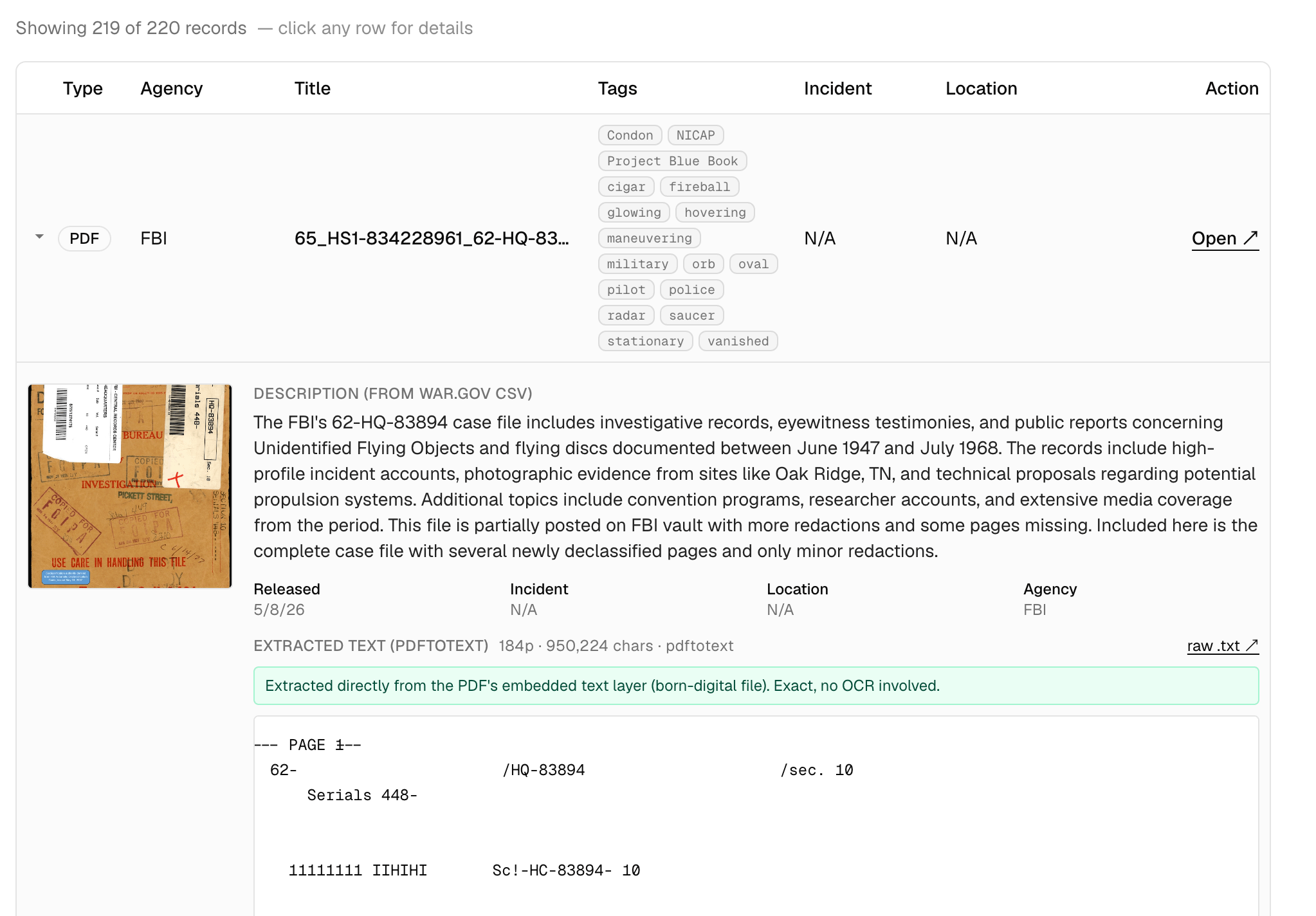
What kinds of spaces am I in? Someone asked me recently what spaces were useful for networking, and I didn’t have a great answer. That’s because the best spaces are specific to your professional interests. They’re the ones that bring you into contact with people who might want to collaborate or hire you, or who you might want to hire. They’re probably not public, but public spaces are how you funnel into them. If you can’t find the space, it might not exist yet, and maybe you need to start it.
More on logistics
I file quarterly taxes. I registered my LLC and I got business insurance. I have a solo 401(k) that I fund from both the employer and employee side. I use Toggl to track hours by project, then enter them into whatever invoicing system the client uses.
Without staff, the administrative load isn’t that different from being a salaried employee. The biggest issue is budgeting for both sides of payroll taxes and retirement contributions.
The other big piece is that billing hourly makes the cost of every choice visible to me. Taking a break or going to a conference feels expensive because it displaces work I could be billing for. In some ways the difference from salaried work is illusory — I’ve had employers that paid out PTO, so there was still an hourly cost to taking time off, I just didn’t feel it as acutely. In other ways, there really is a difference: no one is going to subsidize my conference trips, and there’s work that in a salaried position would be part of the job, but now I have to choose between skipping it or eating the hours myself. For instance, a focus group on federal hiring is very much somewhere I want to be, but I’m also calculating the cost to attend and deciding if I can justify it to myself.
But the same mechanism that makes breaks feel expensive is what makes it possible to do work that wouldn’t fit in any salaried job. When the new OPM data dropped early this year, that was going to be a real chunk of my time for the next few days because I wanted to get to know it and to share that knowledge. I put together a call where I could go over it with some folks, in the middle of a work day, because I wanted to. No one was paying me for it, but that also meant I wasn’t using time that should have been an employer’s. I have trouble imagining anyone who would pay me for a salaried position and still let me do all of the side work I want to do at the times when I want to do it.
Always being on
There was a stretch at AI Corps, a few months, when I was spending most of my evenings and weekends not doing anything that looked like work. I was writing the occasional blog post, working on the occasional side project, but mostly I was hanging out with my kids, watching Netflix, or going to the gym. Then January 2025 came, I realized I was likely to need a new job pretty soon, and that was the end of my weekends. It’s been like that ever since.
The supposed benefit of not having a salaried position — that you can set your own hours — is true in a limited way. I’ll duck out some morning or afternoon most weeks. But I’m spending more hours on things that are like work than I think is healthy.
Some of that is fear. I’m afraid to let up, because everything with AI is moving fast and I’m afraid of being left behind. The fear isn’t about whether I can pay the mortgage this month. It’s about whether I’ll still be able to do this work in two years if I stop putting in the time to learn and build.
But a lot of it isn’t fear. I’m not responding on a Saturday afternoon to someone’s question about how to locate mid-level management in federal personnel data out of fear that if I don’t, I won’t be employable. I’m doing it because I want to. Claude Code is addictive. The work is interesting, and I also think it’s important that people be able to access and understand the data I work with. The talks and the side projects and the meetups and the Signal chats and the writing — I love doing all of it.
A year in
I feel extremely lucky that this is how my year has played out. A lot of people who left the federal government have struggled to replace their income or find anything comparable. If you worked in international aid, there isn’t a big industry for that outside of government, and the jobs that do exist now have enormous competition.
My area of interest sort of went the other way. I started using Claude Code just before I left AI Corps, and that let me work at a speed and across a range of the tech stack that made what I do now possible. Interest in government data and LLM pipelines was also growing, and I sit at that intersection. I don’t think that would have helped me get a salaried job, because what people were hiring for just didn’t adjust that quickly, but it definitely helped me get paid work.
One of the things keeping me here is that I don’t want to be dependent on one institution the way I was at AI Corps. In a short amount of time, it went from being remote to in-person; the hours were now entirely set; the kinds of work we did and some of the tools we could use changed; and my professional development opportunities also became more limited. And that wasn’t unique to AI Corps. The same pattern keeps happening elsewhere: earlier this year, when DoD made the designation that Claude was a supply chain risk, I was thinking about how if I had been in government and lucky enough to get Claude Code access, I would be freaking out at the prospect of the way I work being taken away. Having multiple clients means spreading risk: I don’t feel dependent or at anyone’s mercy the way I felt at DHS. It’s a real relief.
I also don’t know how I’d go back to a normal salaried role where you apply for a job and they compare you to a set of criteria. The longer I do this, the less legible I become. I don’t have a title, I don’t have a clear level of seniority, and the set of things I do every week doesn’t correspond well to any particular role that I’m aware of. And for now, that’s okay. I’m not trying to go back.
Some people make this kind of life look graceful. I make it look like I haven’t slept enough and my GitHub Actions just failed this morning and I don’t know why yet. But it’s mine, I chose it, and I’m so glad I get to do it.
I appreciated hearing about what you’ve learned over the last year. These lessons are valuable for everyone, whether going out on their own now or keeping that option for later.
For six years I ran my own company and learned what worked and what didn’t. Then I got recruited back into corporate life, and figured I’d use what I’d learned when I finally “retired.” That came earlier than expected when I got caught in Amazon’s layoffs last year, and after a lot of thought I am restarting my business, with a plan based on everything I learned before. It’s scary, it’s liberating, and frankly, it’s time. Bravo to you for figuring things out more quickly than I did, and congrats on finding this exciting path.